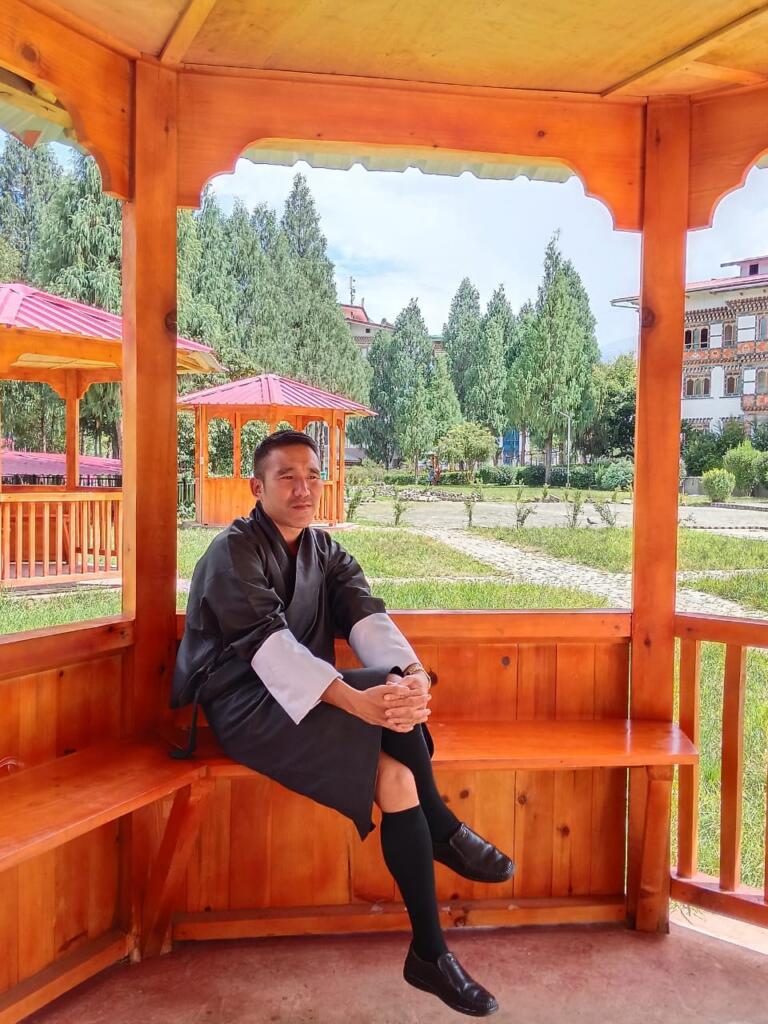
At 39, Wangdi knows what it feels like to lose everything.
He knows what it is like to disappoint the people who love you. To watch friends move ahead in life, while you remain trapped in the same cycle. To lose opportunities, trust, relationships and, at times, even the sense of who you are.
But there is something else Wangdi knows now. That a person can lose his way without losing his worth.
He grew up in Wangduephodrang. He was a good student, and made his way into Gedu College. He carried a simple dream of becoming successful, someone his family could be proud of. But what began as experimentation with friends slowly became something much bigger.
It started with marijuana and later substances. It did not immediately destroy his studies or his life. He could still perform well in school. He could still laugh with friends. From the outside, everything seemed normal.
But addiction rarely announces itself by taking everything at once. It peaked during his college, and eventually, in 2010, he dropped out. For years, he moved between places and tried to work. He helped at construction and family businesses. He did household chores. But increasingly, he needed the pills to do almost everything.
In 2012, he was arrested for the first time. He paid a fine and was released. But the addiction continued. Then, in 2018, Wangdi travelled to Phuentsholing and was arrested again. He was detained, charged and sentenced to five years.
This time, there was no fine that could simply make everything disappear. And the first thing he thought about was not the sentence or his parents but drugs. “How would I survive five years without drugs?”
The withdrawal was brutal. He could not sleep. He sweated and twitched. He experienced stomach problems, cramps and diarrhea. At one point, he fainted. After the first difficult weeks, his body began to recover. He started sleeping again and he could eat. His strength gradually returned.
And then, in the middle of prison term, Wangdi began to pray. The five-year sentence that had initially felt like the end of his life began to look different. He began to see prison not only as punishment, but as a chance to become clean and reshape his life.
By the time he completed serving, he had saved money from his work in prison. He had regained some of his family’s trust. He then married a woman he deeply loved. She believed in him even though her family had reservations about the marriage.
Life seemed to be opening its doors again, but it was not always a straight road. Society did not immediately forget his past. Some people, even relatives, looked down on him. Finding employment was difficult. He faced restrictions and suspicion. And then, after more than five years of being clean, Wangdi relapsed. It began with one pill.
“I thought nobody would know. I told myself it would be only once.”
There were further relapses. There were moments when the people closest to him discovered what was happening. His wife found pills and his family became devastated. Eventually, their marriage fell apart. That loss remained deeply painful. He remembers that his wife stood beside him during some of the darkest periods of his life. And he loved his son.
That child became the strongest reason for him to change.
“I don’t want my son to grow up knowing me only as a man who struggled with drugs. I want him to know me as a father who fought his way back.”
That brought Wangdi to The PEMA Rehab. From his first day at the centre, he sincerely followed its structure. He did not miss meals and classes, and participated fully. He became a captain and helped with activities. And after completing treatment, he saw a vacancy for a warden at The PEMA Rehab.
Wangdi wanted to volunteer. He told his counsellor that he wanted the opportunity. Today, the man who once needed someone to help him through withdrawal is helping others through their own difficult days. Every new client reminds him of who he used to be. But he does not look at them with judgment.
When asked what he would say to young people who are using drugs, he said, “Get help. Get treated. And if you think your life is already too damaged to change, look at me.”
Wangdi has lost years. He has lost relationships, opportunities. But he has also learned that a mistake is not everything you are. He says he still dreams of stability. He still misses his wife. He still hopes that one day his son will understand who his father really is.
And he knows that the only way to earn another chance is not by asking for it. It is by becoming the kind of person who deserves it.
Note: Story and picture shared with permission
If you are struggling, you are not alone. Call us at our toll free number 1098 or reach us at 17123239 via WhatsApp and telegram.