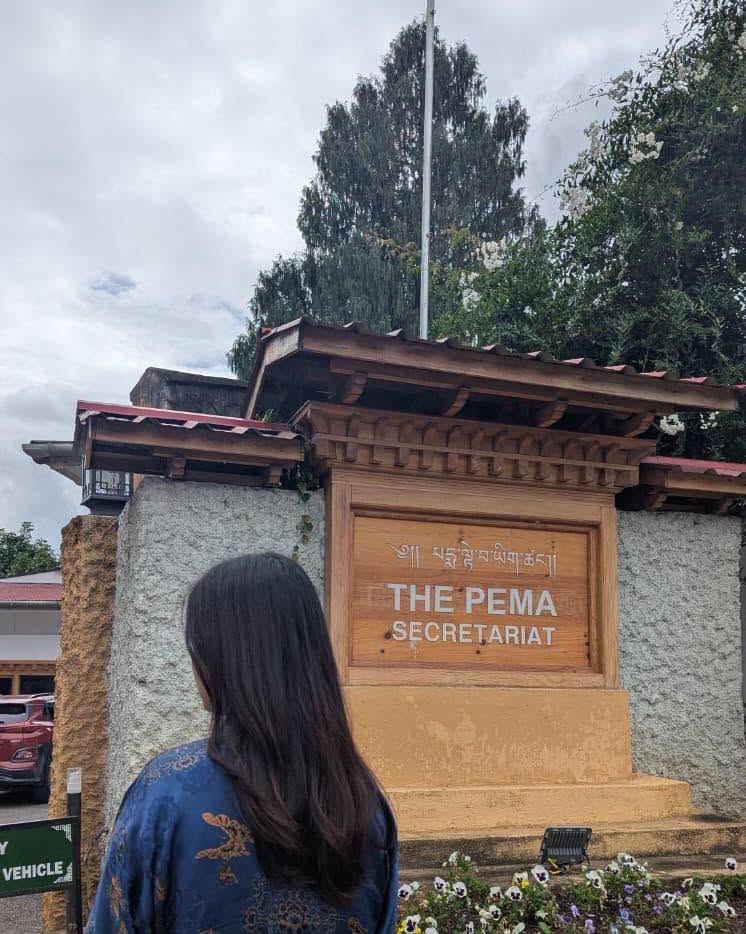
What happens when you reach out to The PEMA in a moment of fear or uncertainty? Behind the helpline and emergency emails are a layer of dedicated frontline workers, who are aptly called the “protection officers”.
Sonam is one of them. She, and her colleagues, serve as the first point of contact for children and families facing difficult circumstances. Her work begins with listening and understanding what has happened, assessing what the child needs and making sure the right support reaches them.
Before joining The PEMA, Sonam spent three years as a teacher. Teaching taught her to work with children. But child protection showed her another side of childhood, the side where a child may need more than a teacher. They may need an adult who listens, believes them and helps them feel safe.
Today, Sonam is also a mother to a young son. Being a mother has given her work another layer of meaning.
“I think about how I would want someone to treat my own child,” she says. “It reminds me that every child deserves to be listened to and protected. Behind every child protection case, there is a child and a family with their own story. We should never make quick judgments without understanding the circumstances.”
That belief lies at the heart of her work at The PEMA. Child protection is rarely as simple as identifying a problem and finding a solution. A child may be facing violence, family difficulties, neglect, financial hardship or other circumstances that affect their safety and wellbeing. Sometimes, the child is unable to explain what is happening at all.
That is when patience matters. Sonam’s role is to listen, assess the level of risk and determine what needs to happen next. In high-risk cases, The PEMA’s protocol calls for a response within four to five hours, because when a child’s safety is at stake, every moment matters. A timely response can prevent further harm, protect the child from immediate risks, and ensure that the right support reaches them when they need it the most. But responding quickly does not mean rushing a child.
“We cannot expect a child who has experienced difficult circumstances to trust us immediately,” Sonam explains. “Trust is built through our actions. If we say we will follow up, we do. If we make a commitment, we take it seriously.”
And, that trust begins with a conversation, by simply staying and helping a child understand that what happened to them was not their fault.
Sonam’s work also extends beyond the child. She works with families and coordinates with counsellors, social services, health professionals and other agencies when support is needed. Because protecting a child is rarely the work of one person.
The PEMA carries forward this vision, of having a system of care where children do not have to suffer in silence and families do not have to navigate difficult moments alone.
For Sonam, that vision becomes real every time she answers a call, sits with a family or helps a child take the next step.
“Life becomes fulfilling when a child finally speaks, when a parent asks help, when a young person realises someone believes them and when an adult chooses to listen,” she says.
As a mother, a former teacher and a Protection Officer, Sonam knows that children need more than protection from harm. They need people who will stand beside them until they feel safe enough to believe in themselves again.
And that is at the heart of The PEMA, to let anyone struggling know that you are heard, you are not alone and that help is here.
Note: Story and picture shared with permission
If you are struggling, you are not alone. Call us at our toll free number 1098 or reach us at 17123239 via WhatsApp and telegram.