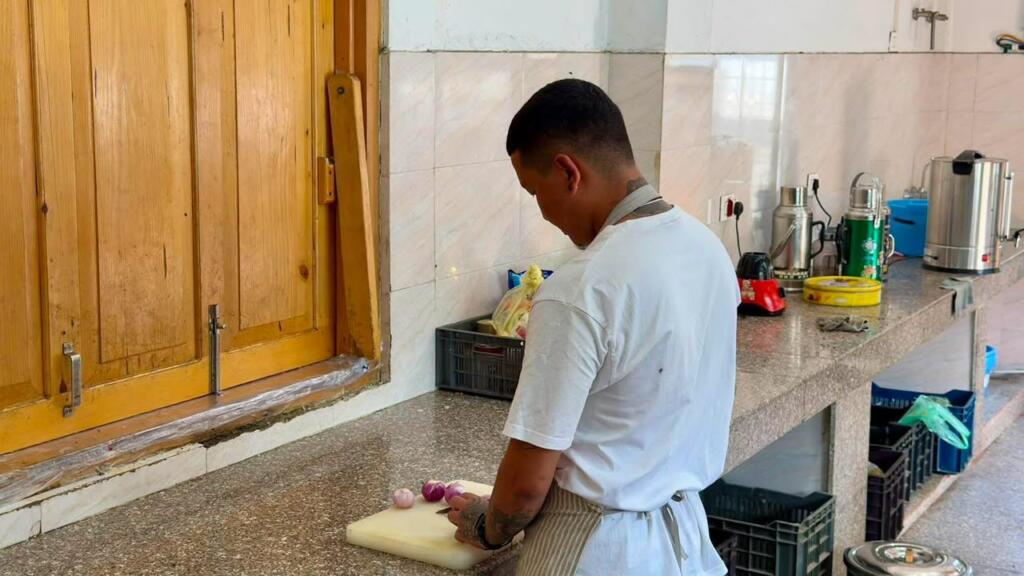
The afternoon light slants through the window. A steady rhythm fills the room as the knife neatly cuts through the onions on the wooden board. He doesn’t turn around when he speaks.
“You know, I used to work in kitchens like this before,” says Tashi Dorji, the tone warm and gentle. “But I was a different person then.”
Tashi started using substances when he was in Class VII. By the time he dropped out of Class X, he had already been in and out of jail. He worked kitchen jobs to survive in Thimphu and Gelephu, always moving, always running.
“There was a time in Gelephu when I didn’t have money for rent. I called my father. He didn’t pick up. That was my lowest point. I wanted to end everything.”
The knife pauses for a second. Then it resumes.
One day, he escaped to Thimphu. His plan was to register for Desuung, but in the process, he was referred to The PEMA Rehab in December 2024. He was terrified. He had heard stories about rehabs. But The PEMA was different.
“They kept us busy from morning to evening. The first month, I struggled. Cravings. But by the second month, something clicked. They taught us how to cope, how to say no, how to walk away from bad influence.”
He takes a long pause. His eyes seem teary. The onions, probably.
“I kept seeing my father’s face. I realised I had to grow out of this. Before, he wouldn’t even answer my calls. Now, he seeks my advice. Our relationship is stronger than ever. My stepmother is proud of me.”
When the three-month program ended, Tashi wasn’t ready to leave. He was afraid he would relapse. So, he asked to stay another month. Then he started volunteering in this very kitchen. Today, the 30-year-old is the head cook.
“When I see new candidates come in, I see myself in them. I tell them, if I can do this, you can too. Some of my friends here have told me that watching me change motivated them to change. That makes me very happy.”
He stops chopping and finally turns around.
“You know what? For the first time in my life, I danced here. I was the orientation captain and I had to dance. I had never danced before in my life,” he smiles. “To anyone out there still struggling, this is your one chance. Make your parents proud. Reach out. Connect to counsellors here.”
He picks up the knife again. Dinner won’t prepare itself. But Tashi is already preparing a new life.
𝗡𝗼𝘁𝗲: Story shared with person’s consent.
Mental health and wellbeing are best understood through the experiences of people. By sharing their authentic voices, our new series, Story of Hope, humbly attempts to increase public awareness and improve mental health literacy.
𝗜𝗳 𝘆𝗼𝘂 𝗼𝗿 𝘀𝗼𝗺𝗲𝗼𝗻𝗲 𝘆𝗼𝘂 𝗸𝗻𝗼𝘄 𝗶𝘀 𝘀𝘁𝗿𝘂𝗴𝗴𝗹𝗶𝗻𝗴 𝘄𝗶𝘁𝗵 𝘀𝘂𝗯𝘀𝘁𝗮𝗻𝗰𝗲 𝘂𝘀𝗲, 𝘆𝗼𝘂 𝗮𝗿𝗲 𝗻𝗼𝘁 𝗮𝗹𝗼𝗻𝗲. 𝗥𝗲𝗮𝗰𝗵 𝗼𝘂𝘁 𝘁𝗼 𝘂𝘀 𝗮𝘁 1098.